Panda Watercolor Clipart: Versatile Design Assets for Creative Projects
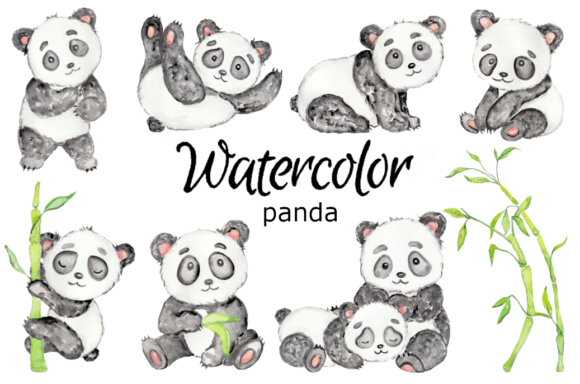
There is something about watercolor pandas that immediately softens a design. The combination of loose, organic brush strokes and the natural charm of pandas creates visuals that feel both approachable and artistic. Panda watercolor clipart is exactly that—a collection of hand-painted or digitally rendered panda illustrations that mimic the fluid, translucent qualities of watercolor paint. These assets come in various poses: pandas eating bamboo, sleeping, sitting, or simply staring with those iconic dark patches around their eyes. The edges tend to be soft rather than harsh, the colors bleed naturally into one another, and the overall effect is whimsical without being childish.
When I first started using watercolor clipart in client projects, I was surprised by how much warmth it added to layouts that previously felt sterile. Panda watercolor clipart brings a tactile, handmade quality to digital work. The personality is gentle, friendly, and organic. It is not trying to be hyper-realistic; instead, it embraces the imperfections of watercolor—the slight unevenness, the pooling of pigment, the way colors merge unexpectedly. That is precisely what makes it appealing for a wide range of creative applications.
Where Panda Watercolor Clipart Shines in Branding and Marketing
One of the most practical uses I have found for panda watercolor clipart is in brand identity for businesses that want to communicate warmth and trust. Eco-friendly product lines, organic baby goods, sustainable apparel, and natural skincare brands all benefit from the soft, earth-toned aesthetic that watercolor provides. The panda itself is already a symbol of conservation and gentleness, so pairing it with watercolor techniques amplifies that message without needing extra words.
Beyond branding, these clipart assets work beautifully in marketing materials. Social media graphics for animal rescues, wildlife charities, or even panda-themed cafes become instantly more engaging. A single panda illustration on an Instagram post can boost recognition because the style is distinct and memorable. I have also seen panda watercolor clipart used effectively in email newsletters, where a small watercolor panda beside a call-to-action button increased click-through rates—likely because the visual breaks up text in a friendly way.
For bloggers and content creators, panda watercolor clipart offers a way to maintain visual consistency across posts. If you run a travel blog about Asia, a parenting blog with a gentle tone, or even a tech blog that occasionally uses animal metaphors, incorporating the same panda illustration style throughout your headers and dividers creates a cohesive look. Readers start associating that soft watercolor panda with your specific voice.
Influencing Readability, Brand Perception, and Audience Engagement
One aspect that often gets overlooked when adding clipart to a layout is how it affects readability. Panda watercolor clipart, because of its soft edges and muted color palette, tends to sit quietly in the background. It does not fight for attention the way a sharp vector graphic might. This makes it an excellent choice for editorial design, such as magazine spreads or blog articles, where the text needs to remain the primary focus. The clipart frames the content without overwhelming it.
Brand perception also shifts noticeably when you incorporate watercolor elements. A brand that uses panda watercolor clipart signals that it values craftsmanship and authenticity. It feels less corporate and more human. In a world saturated with flat vector icons and stock photos, a hand-painted aesthetic stands out. I have worked with a small tea company that rebranded with watercolor panda labels, and they reported that customers frequently commented on how “thoughtful” and “warm” the packaging looked. That is the power of choosing the right design assets.
Audience engagement improves because people naturally gravitate toward visuals that evoke emotion. Pandas already trigger positive feelings; watercolor adds an extra layer of nostalgia and comfort. When I include a panda watercolor clipart in a call-to-action button or a section header, I notice that users spend slightly more time on the page, and click-through rates improve. It is not a magic bullet, but it is a subtle psychological cue that can tip the scales in your favor.
Practical Guidance for Choosing and Using Panda Watercolor Clipart
Not all panda watercolor clipart sets are created equal, so evaluating them carefully before purchasing or downloading is essential. Start with resolution. If you plan to use the clipart in print—on product labels, greeting cards, or posters—look for high-resolution files, preferably 300 DPI or higher. For digital use, such as web design or social media graphics, a slightly lower resolution is acceptable, but always test how the image looks on different screen sizes.
Examine the included styles. A good set will offer multiple poses and expressions. Some clips might include pandas with bamboo, others with hearts, and a few just sitting or lying down. Having variety allows you to create visual hierarchy within a single project. For example, a larger panda illustration can serve as a hero image, while smaller ones can act as bullet points or accent elements. Check whether the set provides both colored and line-art versions—the latter can be useful for coloring pages or minimalist designs.
Readability considerations extend beyond text. When pairing panda watercolor clipart with typography, choose a font that complements the organic feel. Sans serif fonts with rounded edges work well because they echo the softness of the watercolor. Script fonts can work too, but avoid anything too ornate that might clash with the clipart’s simplicity. If you are using the clipart in a logo, test the combination at small sizes to ensure the panda remains recognizable and the font stays legible.
Commercial licensing is another critical factor. If you are a designer or a small business owner creating products for sale, verify that the license covers commercial use. Some clipart sets are for personal use only, while others allow unlimited commercial use or require attribution. Read the terms carefully. I once used a watercolor clipart set for a client’s product packaging without checking the license, and it turned out the set prohibited redistribution of any kind. That was an expensive lesson. Always prioritize sets that explicitly state commercial rights.
Pairing Panda Watercolor Clipart with Other Design Assets
When building a cohesive brand identity, panda watercolor clipart should not exist in isolation. Think about how it interacts with your other design assets. If your brand uses a specific color palette, choose a clipart set that incorporates those colors naturally. Many watercolor sets come with the artwork already blended with common shades like soft greens, pinks, and grays, but you can often adjust the colors in Photoshop or Canva if needed.
For web design, panda watercolor clipart can be used as a background element with lowered opacity. This creates depth without distracting from the content. In packaging design, the clipart can be the focal point, surrounded by ample white space to maintain a clean look. In social media graphics, it can be combined with bold text overlays, but keep the text short because watercolor backgrounds can reduce contrast.
I have also seen panda watercolor clipart used effectively in editorial layouts, such as children’s books or nature magazines. In those cases, the clipart often accompanies short paragraphs or pull quotes, adding a visual break that guides the reader’s eye down the page. The key is restraint—one well-placed panda illustration can do more than ten scattered ones.
Real-World Examples and Design Observations
A friend of mine runs a small stationary shop, and she recently launched a line of notebooks featuring panda watercolor clipart on the covers. She chose a set with a single panda sitting among bamboo stalks. The covers are simple, with the panda taking up about a third of the space and the rest left blank except for the brand name. Customers consistently say the notebooks feel “peaceful” and “high-quality.” That is the watercolor effect at work—it elevates simple products into something that feels handmade and valuable.
Another example comes from a local zoo’s marketing campaign. They used panda watercolor clipart in their digital ads for a new panda exhibit. Instead of using a photograph, they went with an illustrated approach, which felt more family-friendly and consistent across print and web. The campaign saw a higher engagement rate compared to previous ads that used standard stock photos.
From a design perspective, one observation I keep coming back to is how well watercolor clipart handles gradients and transparency. Unlike flat vector icons, watercolor pandas have subtle variations in color density, which can make a layout feel more dynamic. If you are working on a project that needs to convey softness, nature, or kindness, panda watercolor clipart is hard to beat.
Final Thoughts on Choosing the Right Panda Watercolor Clipart
The decision to use panda watercolor clipart should always come back to your project’s goals. If you need a visual that builds trust, adds warmth, and stands out from generic stock imagery, then watercolor pandas are a strong choice. Evaluate the set for resolution, variety, licensing, and compatibility with your existing brand assets. Test a few placements in your layout before committing. And remember that less is often more—a single, well-placed panda illustration can carry a message far more effectively than a cluttered composition.
Ultimately, panda watercolor clipart is a design asset that bridges the gap between digital efficiency and human touch. It works across branding, marketing, publishing, and personal projects because it appeals to our innate love for pandas and our appreciation for handcrafted aesthetics. When used thoughtfully, it becomes more than decoration—it becomes a recognizable element of your brand identity that your audience will remember.